
Fast, private, local-first e-banking for people who like nostalgia, but not in the products they use daily.
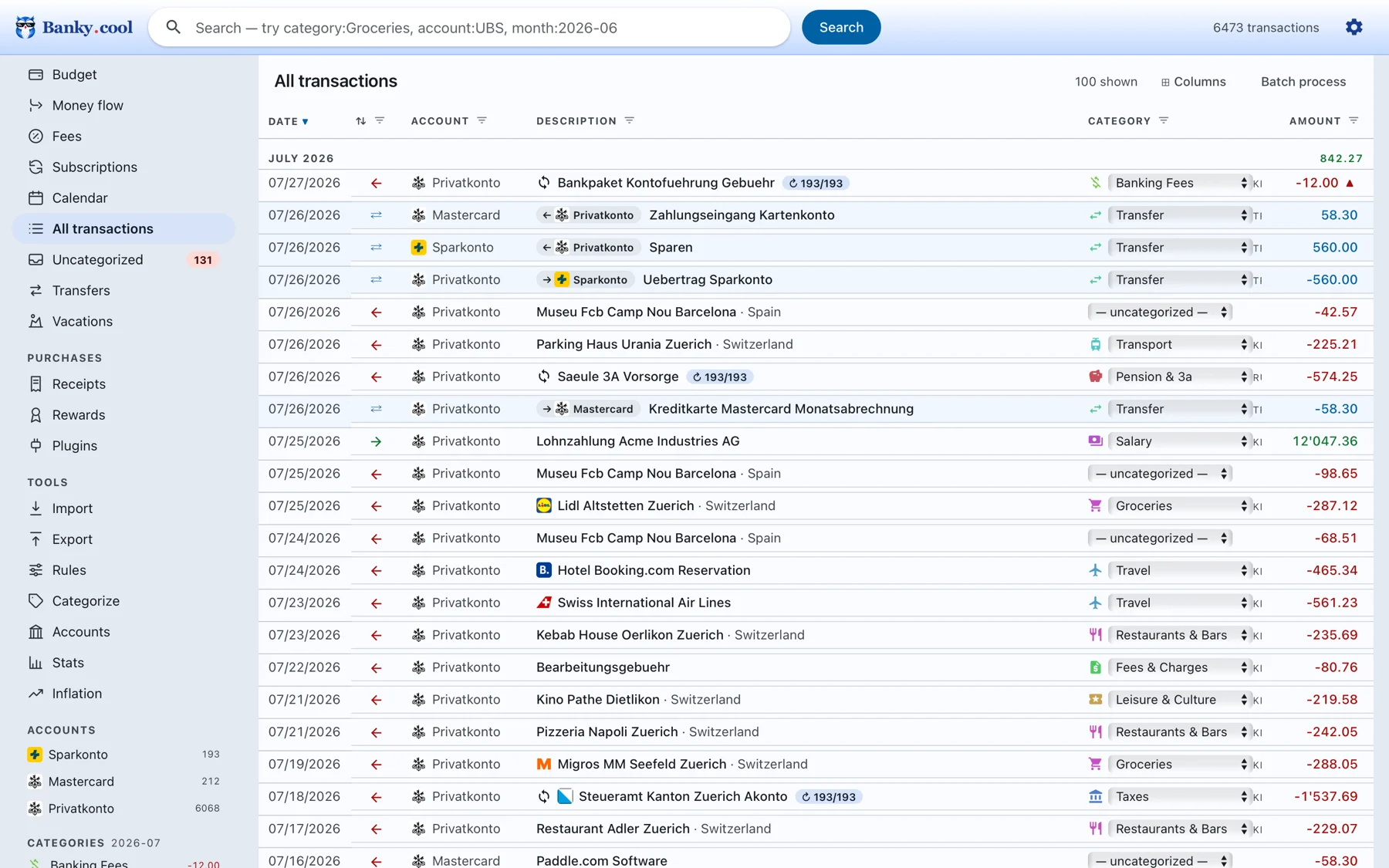

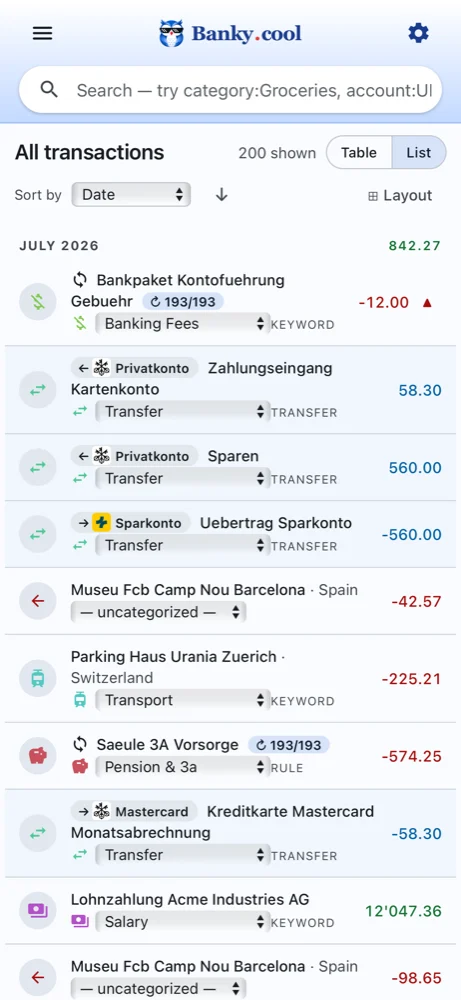
Banky.cool is a local-first, read-only e-banking client, built because most e-banking still looks like it is waiting for the fax to arrive. You download your own statements from banks such as UBS and PostFinance — camt.053, MT940, CSV, credit-card exports, the PDF ZIP bundle — and Banky turns them into one searchable picture. Everything lands in a single SQLite file on your own machine: no cloud account, no telemetry, no outbound call unless you ask for one. The format is sniffed from the content rather than the file name, so re-importing the same download twice is simply a no-op.
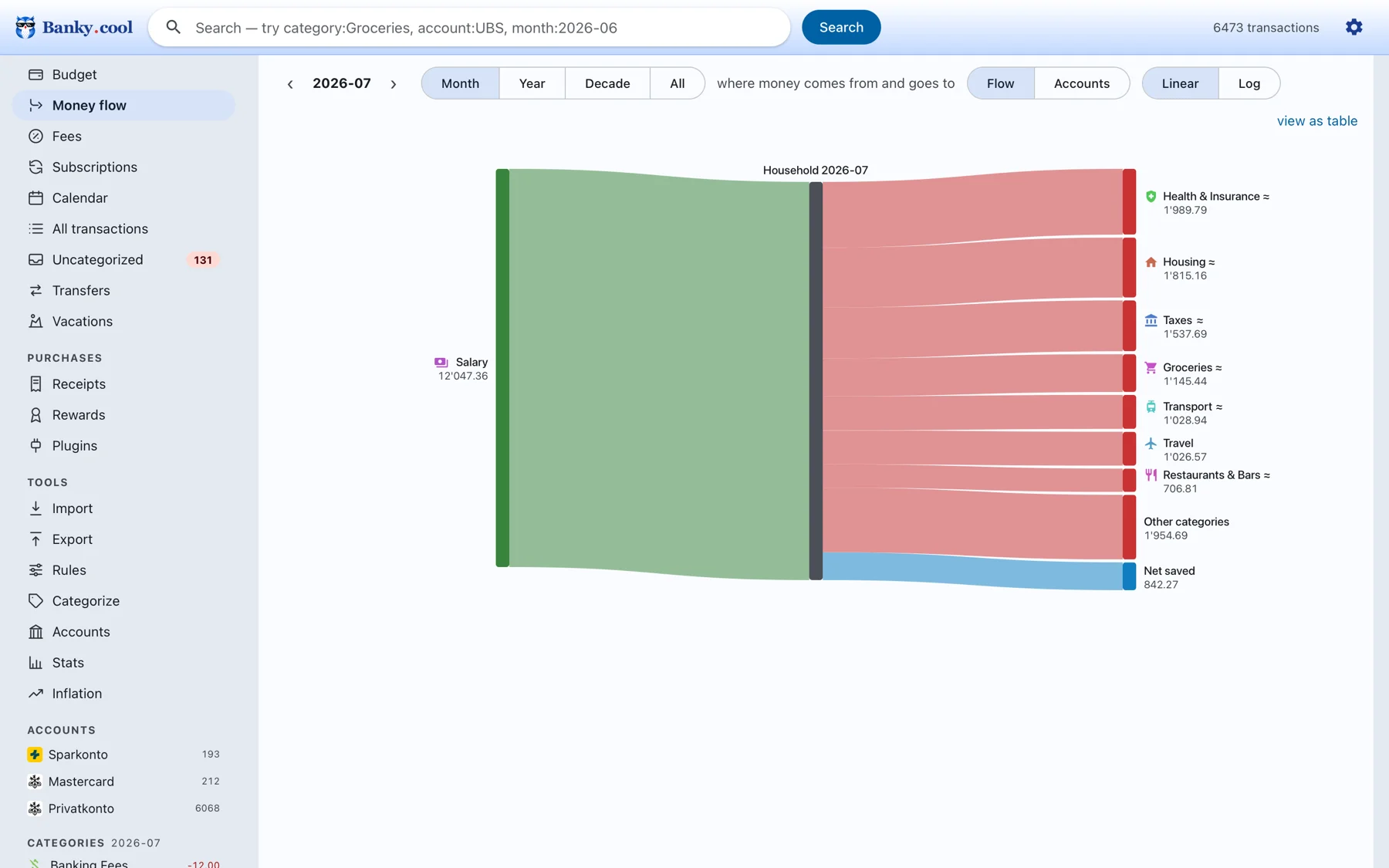
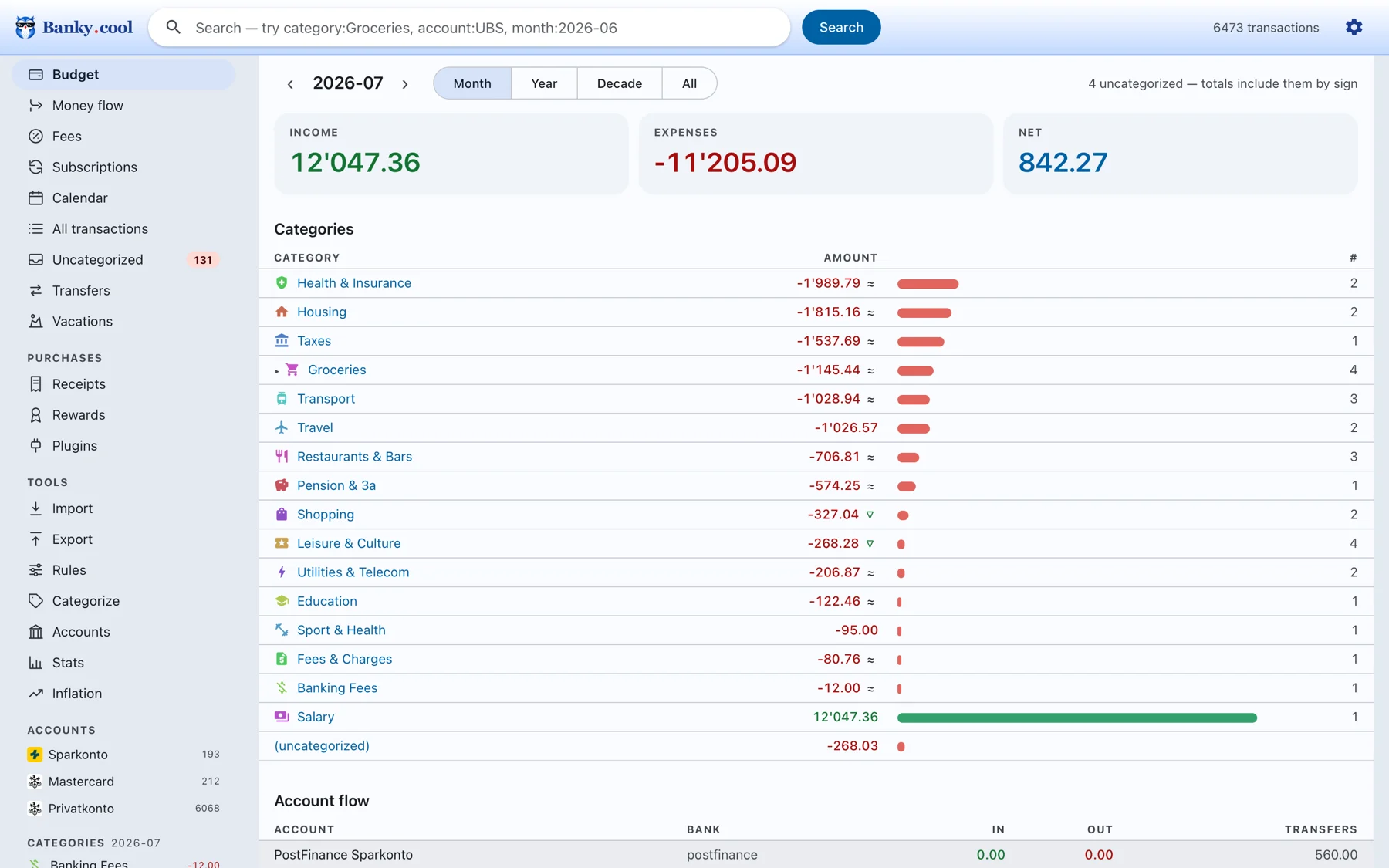
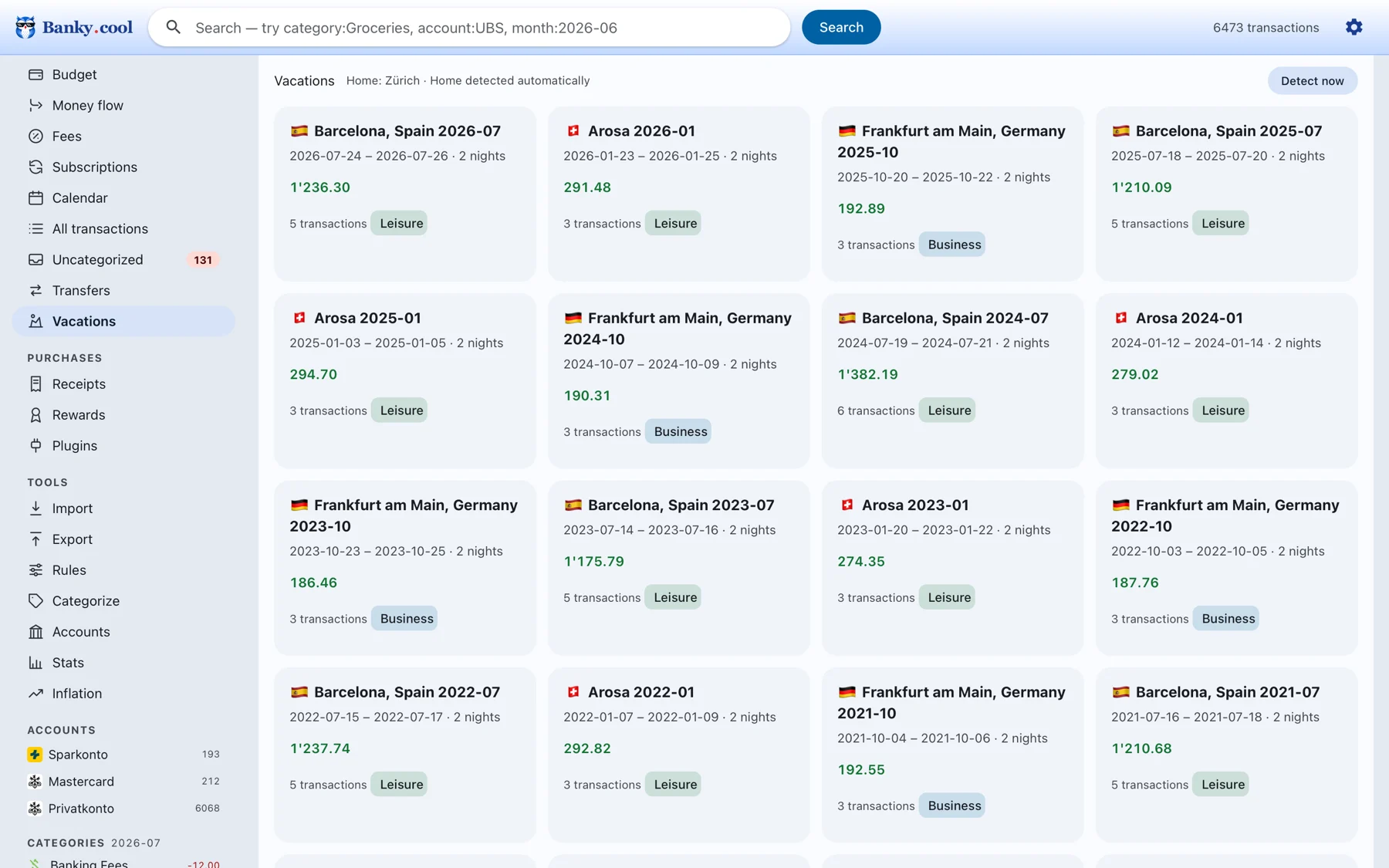
Search is instant across sixteen years of bookings, and it forgives you: type “spofy” and you still get your Spotify charges. Beyond the ledger, Banky aims at financial literacy. Monthly and annual budgets, a money-flow Sankey, a subscription radar that surfaces the recurring charges you forgot about, a fee report rating what you pay your bank against the Swiss market, and your spending categories compared to the federal statistics on what a typical Swiss household spends. A vacation detector groups spending away from home into editable trips. Categorisation runs entirely locally through rules, a Swiss merchant table and a small neural net trained on your own labels — AI smart without the cloud. An iOS companion app embeds the same Go engine and locks itself behind Face ID after 30 seconds.
Because “e-banking” and “cool” haven’t been in the same sentence ever, and I wanted to fix that.
Written in Go with one single dependency, built with Claude Code over a lot of evenings. The neural net trains on your own labels, on your own machine; tests run on synthetic data only. The public demo uses 100% synthetic data: a fictional household, thousands of transactions, nothing real.